
Ghosts Everywhere
A Willerby Christmas Tale

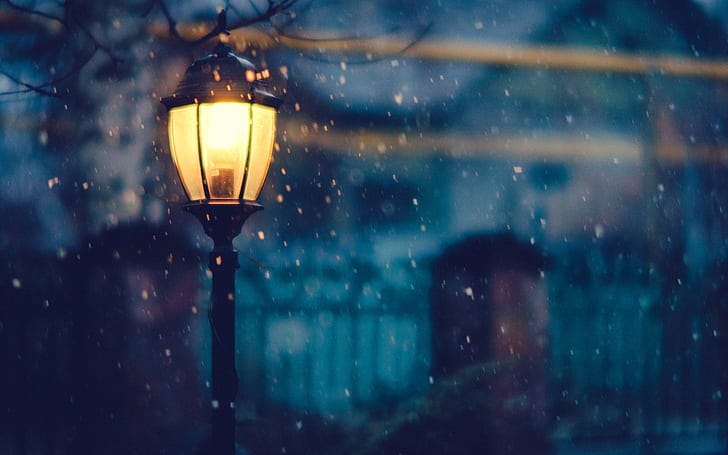
On Christmas Eve in Willerby – a small village not very far from where you live - the children go door-to-door singing carols.
For as long as anyone can remember the adults have led them down the only street, past the Green Man pub, past the barrows and past the pool in which something dark called Jack sleeps.
And then, in the puddles of light that fall from open doors, they sing.
At the end of the evening the singers gather at the green and then to a kindly house for mince pies, hot cocoa and mulled Ribena in front of an open fire.
There is always a girl who both belongs and does not belong, who is there and not there.
She wears the same clothes and is always the same age.
While the village and its residents change, she never does.
She smiles as she sings, correct on every word.
The girl never speaks and when the last song is sung, she goes back down the lane where – it is presumed – she returns to her forgotten grave lost somewhere in the undergrowth of the ancient churchyard.
Nobody is alarmed by her.
She just likes singing with other children and there is no harm in that.
There is no need for priests with their burning holy water.
There will never be exorcism, for to look at her is to know she is not evil.
She is welcome here.
For many living in in Willerby she’s resassurance – a sign when we are gone there may be something else after.
She was a particular comfort to David and Mauve Johnson who brought up four children – three long departed and living miles away – and buried one in Willerby; little Andy – hit by a car on a nondescript Tuesday in February the week before his eleventh birthday – the worst day of their lives.
The worst day in Willerby in living memory.
A dreadful dull thud everyone heard.
Mauve screaming and David shouting for someone to call 999 while the drunk driver staggered around shouting he was sorry again and again.
This never stopped bothering Mauve. “As if anyone cared he was sorry,” she said to David many times over the years, a splinter she couldn’t pull, “as if that mattered at all, as if it were relevant, as if anyone gave a fucking shit.”
Then after the shouting and screaming the sirens and after that – worst of all – the awful deadly silence that fell over the houses and the villages and never really went away.
“If she’s here,” Mauve once said to David “then that means a part of us goes on.”
Then one year there were no children in Willerby because all the old ones were grown and there were no young families.
For the first time no singing was arranged.
Nobody thought about the girl from the graveyard.
Until – looking out of the bedroom window together - David and Mauve saw she had come anyway.
She was under the lamp that lit the lane that went to the graveyard, her features shadow-edged dark in the island of light.
She looked left and right, searching, took a step forward – uncertain and uneasy – and then stepped back.
“David,” said Mauve. “We can’t leave her there. Not on her own. Not tonight. Not on Christmas Eve.”
David shifted uneasily – but while the girl was eerie and he was afraid he knew his wife was right.
“I’ll get our coats,” he said.
They were in the hall by the door when they heard her singing.
Joy to the World – a child’s voice, clear and high and and almost unbearably lonely.
They opened the door and went to go to her, but before they took a step, they saw they were not alone.
In the front gardens of all the houses in the village stood small groups of children.
They were singing too and walking out onto the street as more children appeared behind them.
It went on and on until there were hundreds of them. Maybe thousands.
Ghosts?
Perhaps but if they were, some at least were ghosts of children who did not die because David and Mauve knew the living adults they had become.
Familiar faces with the years peeled away from them – old neighbours and friends – children who had moved away and they’d never seen again.
Children who’d been sometimes funny, cheeky and kind, sometimes sad, disappointed and discouraged, who’d laughed and cried, loved and been loved.
Children who’d grown to travel the world and children who’d never moved far from where they were born. Children who’d grown to have children of their own and some children who – like Andy - did not get time to do much at all.
Children who’d become adults, their memories bleeding into an abstract wash, fuzzed with nostalgia and half-remembered secrets, exiled from a kingdom they could now hardly see.
And their own children.
“Mauve,” David said. “Look it’s Sally”. And although Sally was now forty-five and living in Australia there she was, seven again and stepping along the street hand in hand with an older boy she’d adored so many years ago and David had forgotten all about.
And then next to Sally they saw her older brother Max, and her younger sister Sarah -all grown now but children again on that night – singing and smiling in the dark.
But Mauve could not settle to the miracle.
She moved into the small front yard to see the whole street. She scanned the road, head turning left and right, looking through and past the singing crowd.
Then with a gasp that was also a sob she reached back and pulled her husband to her. “David,” she said. “Look! Look by the churchyard gate! He’s come! He’s here!”
There – where the girl had been before -stood Andy wearing a scarlet coat his grandmother had given him as Christmas present many years before.
“Andy” Mauve shouted, waving, “Oh my boy, Andy! Is it really you?”
David was shouting too. “Andy! Andy! We love you! We never stopped loving you! We’ll always love you! We think about you every second. Oh, our boy, our beautiful boy, we never forget you! We never did, we never will!”
And Andy did see them because he was waving back and grinning, mouthing he loved them too, before he ran to his two sisters and his older brother, who swept him up onto his shoulders to carry him to the green where all the children were now gathering.
They sang Silent Night like a choir, close together and swaying slowly until – although not a drop had been forecast it began to snow so heavily they were hidden, their voices muffling then dropping away to nothing.
It snowed the whole night, and Christmas day too, covering the street and the cars, folding the hedges into the fields, painting the world as blank and timeless as eternity.
On Boxing Day – when it finally stopped – there was no sign of them.
“It’s funny really, thinking only the dead can be ghosts,” Mauve said to David long after it was all over and they’d both cried the healing tears they’d waited too long for, “because we die every minute, don’t we? We’re only ourselves for a moment. We’re not the same a day to the next. We leave ghosts everywhere.”
Gorgeous
The last paragraph of this story is outstandingly moving, beautiful and haunting. What a way to end the year in the village....